
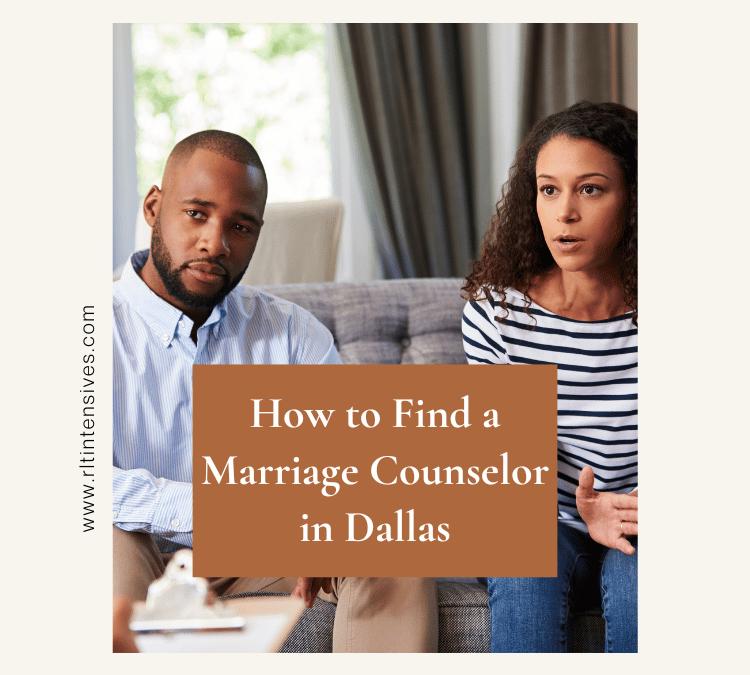
Finding a marriage counselor in Dallas should be easier than it is.
You search online and find hundreds of therapists. Nearly every website promises a compassionate, nonjudgmental environment. Most mention communication, connection, and healing. Some list couples counseling alongside anxiety, depression, trauma, teenagers, career changes, and nearly every other problem a person could bring to therapy.
After reading a dozen profiles, they can all begin to sound the same.
Meanwhile, you and your partner may already be struggling. Perhaps you keep having the same argument. One of you is pushing for therapy while the other is skeptical. Maybe you have tried counseling before and do not want to spend another six months talking without anything meaningfully changing.
You are not simply looking for someone with availability. You are trying to determine whether a stranger on the internet can actually help your relationship.
There is no perfect marriage counselor for every couple. There are, however, some meaningful ways to narrow your search.
Look for Someone Who Actually Specializes in Couples Therapy
Many therapists are willing to see couples. That does not necessarily mean couples therapy is a significant part of their practice.
Working with a couple requires more than doing individual therapy with a second person in the room. A couples therapist must pay attention to each partner while also tracking what happens between them.
Who pursues? Who withdraws? What happens when one partner feels criticized? How does the other respond when they feel ignored, controlled, or misunderstood? Which behaviors keep the cycle going?
A therapist who specializes in couples work should be able to help you understand the pattern, not simply referee the latest argument.
As you review websites for marriage counselors in Dallas, look at how specifically they talk about relationships. Do they describe the couples they help? Do they explain their approach? Does couples therapy appear central to their work, or is it one item in a long list of services?
You do not need a therapist who only works with couples. You probably do want someone who has invested meaningful time and training in learning how to do this work well.
Ask About Specialized Training
A professional license tells you that a therapist has met the requirements to practice. It does not tell you how much specialized training they have received in couples therapy.
Marriage counselors may be Licensed Professional Counselors, Licensed Marriage and Family Therapists, clinical social workers, psychologists, or other qualified mental health professionals. The letters after a therapist’s name matter, but they do not answer every question about competence.
Ask what training they have completed specifically related to couples.
Some therapists train in approaches such as:
- Relational Life Therapy
- Emotionally Focused Therapy
- the Gottman Method
- Imago Relationship Therapy
- discernment counseling
No single approach is right for every couple. The important thing is that the therapist has a clear framework for understanding relationships and helping couples create change.
“Tell me more about that” can be a useful therapeutic question. It is not an entire model of couples therapy.
Find Out What the Counselor Actually Does in the Room
Therapists vary considerably in how active they are.
Some primarily create space for each partner to explore their feelings. Others use an approach that is more direct. They may interrupt an unhealthy exchange, identify what is happening, challenge defensiveness, teach a specific skill, or ask the couple to try the conversation again differently.
Neither style is automatically right for everyone. But you should know what you are signing up for.
One useful question to ask during a consultation is:
“What do you typically do when a couple starts having the same argument in your office that they have at home?”
The answer may tell you more than asking a therapist to describe their theoretical orientation.
You can also ask:
- How structured are your sessions?
- How do you help couples move from insight to actual change?
- Do you give couples specific things to practice between sessions?
- How will we know whether therapy is working?
- What happens if one of us is much more motivated than the other?
A good marriage counselor should be able to explain their work in language you understand.
Look Beyond “We Need to Communicate Better”
Many couples begin therapy believing they have a communication problem.
Sometimes they do. But most distressed couples communicate quite a bit.
They explain. They defend. They correct each other’s version of events. They repeat themselves. They send long text messages. They argue about tone, timing, intentions, and who started it.
The problem is often not that they are failing to communicate. It is that their communication has become organized around a painful and predictable pattern.
One partner pushes harder because they do not feel heard. The other shuts down because they feel criticized or overwhelmed. The withdrawal creates more anxiety, so the first partner pushes even harder. Before long, both people are reacting to the reaction rather than addressing the original issue.
A capable couples therapist should help you identify the cycle, understand what each of you contributes to it, and learn what to do instead.
Improved communication matters. But couples therapy should offer more than a list of sentence starters and a reminder to use “I” statements.
Pay Attention to How the Therapist Approaches Accountability
Couples therapy is not about deciding which partner is the good one and which is the bad one.
It is also not about pretending that every problem is perfectly equal.
Both partners influence the relationship, but that does not mean responsibility is automatically split 50/50 in every situation. One partner may be behaving in a way that is more dishonest, contemptuous, controlling, avoidant, or destructive.
A good marriage counselor should be able to understand where a behavior comes from without excusing the damage it causes.
Empathy is important. So is accountability.
You want a therapist who can help both of you examine yourselves honestly without creating unnecessary shame. The goal is not to determine who is fundamentally defective. It is to identify what each person needs to stop doing, what they need to take responsibility for, and what they must learn to do differently.
Consider Whether the Therapist Understands Your Particular Relationship
Every couple brings a different context into therapy.
You may be navigating:
- a recent autism or ADHD diagnosis
- recurring high-conflict arguments
- betrayal or an affair
- sexual or emotional disconnection
- different communication and processing styles
- uncertainty about whether to remain married
- the challenges of a blended family
- years of resentment that never fully gets resolved
No therapist will have lived every experience their clients bring into the room. Still, they should understand the issues that significantly shape your relationship or be honest when something falls outside their expertise.
For neurodiverse couples in particular, advice that assumes both partners process emotions, language, conflict, and connection in the same way can make matters worse. The therapist should be able to recognize meaningful differences without reducing either partner to a diagnosis or stereotype.
Do Not Ignore the Practical Fit
Dallas is a large city, and a therapist who looks close on a map may not feel close during weekday traffic.
Think realistically about whether both partners can attend consistently. Consider the office location, appointment times, session length, work schedules, childcare, and how much stress you will experience simply trying to arrive.
You may decide that a marriage counselor in another part of Dallas—or even nearby Plano, Richardson, or Frisco—is a better practical fit. You may also prefer online counseling if appropriate and available.
The best therapist on paper will not be especially helpful if the logistics make regular attendance nearly impossible.
Some couples also benefit from longer sessions or an intensive format rather than traditional weekly appointments. The right structure depends on the severity of the situation, your goals, and your ability to maintain momentum between sessions.
Use the Consultation to Evaluate Fit
Many couples therapists offer a brief consultation before scheduling the first session. Use it.
You are not trying to determine whether the therapist can guarantee that your marriage will work. No ethical counselor can promise that.
Instead, pay attention to whether the therapist:
- asks thoughtful questions
- seems comfortable working with conflict
- can explain their approach clearly
- understands both partners without flattening important differences
- is willing to address harmful behavior
- offers a realistic idea of what the process may involve
Feeling comfortable matters, but effective couples therapy will not always feel comfortable.
A better question may be whether the therapist seems trustworthy, competent, and capable of helping you have conversations that you have not been able to navigate on your own.
Finding the Right Marriage Counselor Takes Some Work
When your relationship is already strained, researching therapists may feel like one more exhausting task.
Unfortunately, a polished website and a convenient appointment time do not tell you everything you need to know. Neither does a long list of credentials.
Look for someone who genuinely specializes in relationships, has meaningful couples-therapy training, can explain what they do, and offers an approach that fits what you and your partner need.
You are not looking for a perfect therapist.
You are looking for someone who can see the pattern clearly, tell you the truth with compassion, and help both of you begin doing something different.
I provide focused, in-person couples therapy intensives in North Dallas using Relational Life Therapy. If you are trying to determine whether an intensive is the right next step for your relationship, you can schedule a free consultation to learn more.
Ready to Transform Your Relationship?
Take the first step towards a more connected and fulfilling relationship. Schedule your free consultation today and discover how a couples intensive can accelerate your relational recovery.